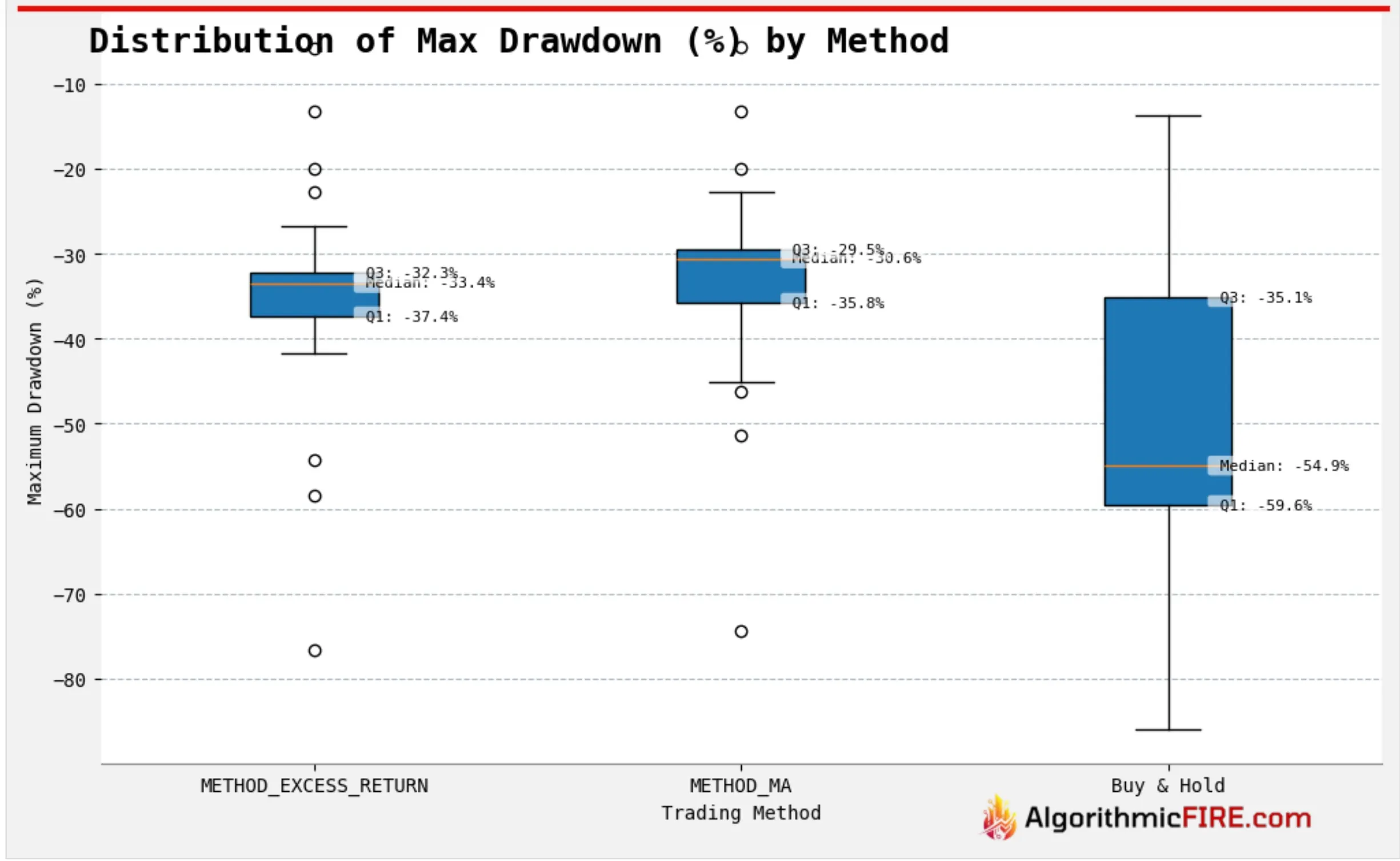
You probably heard about trend following strategies, right? They come with this huge promise to protect your portfolio from those absolutely gut-wrenching market crashes. It sounds fantastic in theory, but well, there's always a catch, isn't there? In this case, it's taxes. So, today we are diving deep into the data to answer one critical question. After the tax man takes his cut, is this portfolio insurance really worth it? All right, let's start with that fundamental fear. You know, the one that keeps every investor up at night. You've worked hard. You've built your portfolio. You're doing the whole buy and hold thing, but in the back of your mind, you can't help but wonder what happens when the next big crash hits. Is there any way to sidestep a truly catastrophic loss? Well, this is where an alternative idea comes into play. Trend following. The concept is actually pretty simple. Get in when the market is trending up and get out when it starts to head south. It's often pitched as a type of portfolio insurance, a way to shield your capital when things get ugly. But just like any insurance policy, you have to wonder what's the premium. So, here's our game plan. We're going to start with that promise of protection. Then, we'll dig into the hidden cost, taxes. After that, we'll run a serious stress test on stocks, then see if the story changes when we look at bonds, and finally, we'll lay out the final verdict on whether this whole strategy can actually survive a run-in with the tax code. So, what is the catch? Well, the very heart of trend following means you're buying and selling way more often than a simple buy and hold investor. And in a regular taxable account, every single time you sell for a profit, you trigger a tax event. This is the hidden cost we really need to get to the bottom of. Okay, just a quick refresher. So we're all on the same page. Capital gains tax is just what it sounds like. It's the tax you owe on your profits. You buy an ETF for 100 bucks, you sell it later for 150. Well, that $50 is your gain and the government wants a piece of that action. The big question is how big of a piece? And this is exactly why frequent trading becomes a huge tax problem. If you hold an asset for less than a year, your profit gets taxed as a short-term gain. That means it's taxed at your higher ordinary income tax rate. But if you hold it for over a year, it qualifies as a long-term gain, which gets much, much better tax rates. Trend following, well, it's going to generate a whole lot more of those really expensive short-term gains. Now, to really put this to the test, the source material set up a seriously tough scenario. We're totally ignoring tax advantaged accounts like 401ks or IAS. We're also assuming a high tax bracket, hitting every trade with a whopping 35% tax on short-term gains and 20% on long-term. This isn't a best case scenario. It's a near worst case, which honestly makes the results we're about to see even more powerful. All right, game time. Let's start with stocks. We're looking at a whole basket of the largest stock ETFs out there. The question is simple. Does the downside protection you get from trend following actually outweigh the tax drag from all that extra trading? First up, the good news. And it's really good news. The core promise of protection. It absolutely holds up even after taxes. A simple buy and hold strategy saw a median maximum loss of a jaw-dropping 55% during a crash. But the trend following strategies, they cut that loss all the way down to around 33%. I mean, that is a massive difference. The insurance is definitely working. But, and you knew there was a buck coming. Here's the trade-off. That safety has a price tag, and that price is overall performance. As soon as we factor in those high tax rates, the median annual growth for the trend strategies actually dips below buy and hold. You're giving up some of that upside, that 9.3% median from buy and hold to get that downside protection. So, let's just focus on this one number for a second, 8.4%. This is the median after tax return for the better of the two trend strategies tested, which is called the excess return method. Now, 8.4% 4% isn't bad, but it is almost a full percentage point lower than just buying and holding. This is the premium you're paying for your insurance. And finally, what about on a risk adjusted basis? You know, how much bang are you getting for your buck? We look at the sharp ratio for that. Before taxes, trend following had a really clear edge. But after taxes, poof, that advantage completely disappears. The median sharp ratios for all three strategies end up clustered right around 0.56. So for stocks, the tax drag completely wipes out that riskadjusted advantage. Okay, so for stocks, it's a classic insurance story. You pay a premium for protection. But what happens if we run the exact same test on bond ETFs? Are we going to see the same tradeoff or does something totally different happen? Let's find out. So first, let's check the downside protection. And yep, just like with stocks, trend following does its job beautifully. The median draw down for buy and hold was almost 18%. But the trend strategies, they chopped that down significantly to around 11%. So check one, the insurance part is still very very effective for bonds. And this this is where the story completely flips on its head. Remember how trend following lagged on returns for stocks? Well, with bonds, it's the complete opposite. The best trend strategy delivered a median after tax return of 3.1% that's over a full percentage point higher than buy and holds 2.0. This is the key finding right here. With bonds, you get the protection and you get better performance. It's like the insurance company is paying you. And the risk adjusted numbers. They just confirm the incredible story for bonds. The best trend strategy has a median sharp ratio of 69 which is way higher than buy and holds.59. It is not a close call, not like it was with stocks. For bonds, trend following is the clear undisputed winner even after we account for taxes. Okay, we've just seen two very, very different stories. One for stocks and one for bonds. So, let's bring it all together, land this plane, and figure out what the final verdict is for using these strategies in a real world taxable account. You know, the whole idea we started with is captured perfectly in this quote from the source material. The thinking was trend following is like insurance. The downside protection is going to cost you a little bit of upside. And for stocks, hey, that's exactly what we saw happen. This little table really says it all, doesn't it? For stocks, you get significant protection, but you pay that premium with lower returns. But for bonds, the story is completely different. You get the same great protection, but your returns are actually higher. It's like getting free insurance that pays you a dividend just for having it. Oh, and one more really clear takeaway from all this data. Across both stocks and bonds, the excess return strategy consistently did better than the other method tested, the moving average method, especially after taxes. So, if you were going to implement a trend strategy, this analysis points to a pretty clear favorite. So, if you're going to remember anything from this, let's make it these four crucial takeaways. First, for stocks, that portfolio insurance comes at a price. Second, for bonds, you actually get paid to be protected, which is just amazing. Third, and this is maybe the most important point, the after tax benefit of trend following is completely different depending on the asset class. And finally, the specific strategy you choose really, really matters. And all of that leaves us with one final question, which is really a personal one for you. When it comes to your stocks, knowing that you're paying a small performance premium to avoid a potential 55% crash, is that a price you're willing to pay for a better night's sleep? The data gives us the trade-offs, but in the end, the final decision is all yours.